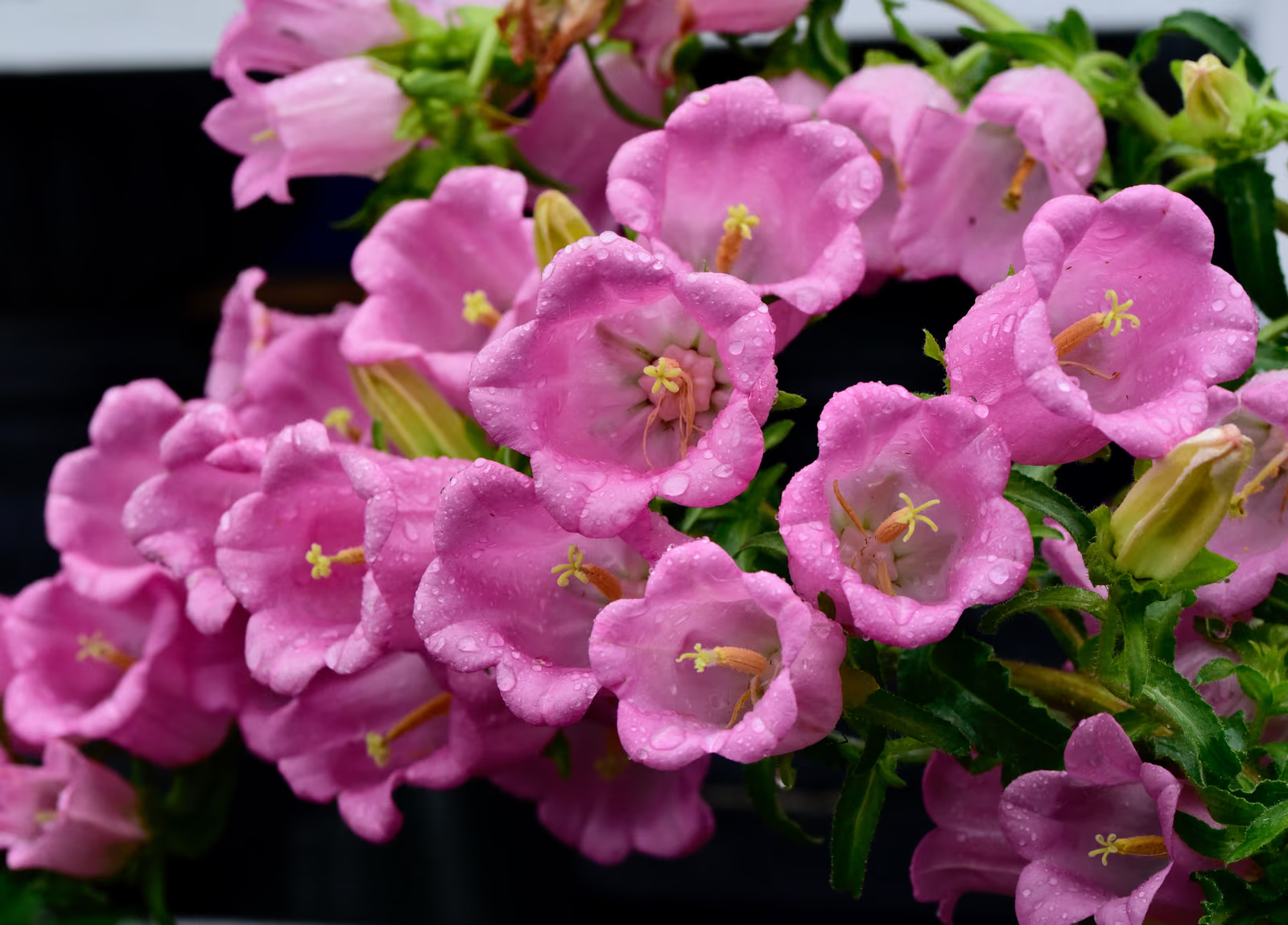
Canterbury BellsCampanula medium
Canterbury Bells is non-toxic for cats, non-toxic for dogs. We found no reliable data for rabbits — please ask your vet first.
Canterbury bells are rated Grade A in La Terre's pet-friendly flower classification: there is clear evidence they are non-toxic to cats and dogs, making them a first choice when sending flowers to a home with furry companions. "Non-toxic" does not mean edible, so still keep pets from nibbling them.
Safety at a glance
- catcat・Non-toxicListed as non-toxic
- dogdog・Non-toxicListed as non-toxic
- rabbitrabbit・No dataNo reliable data found — please ask your vet
- Scientific name
- Campanula medium
- Family
- 桔梗科 Campanulaceae
- Also known as
- Bellflower, Campanula
- Season
- Spring–Summer (March–June)
- Colors
- Blue-violet, pink, white
Flower meaning
Gratitude, gentle love.
Care tips
Change the water every 1–2 days and trim the stem base at an angle; remove any leaves sitting below the waterline. Keep in a cool, shaded spot away from direct sunlight, air-conditioning vents and fruit. Pinch off spent blooms and the buds above will continue to open.
About this flower
Each canterbury bell blossom looks like a tiny bell — a charming addition to spring and summer bouquets.
Our designs with this flower
Want a bouquet with this flower? Tell us and our florist will design one.
Have pets at home?
Add “I have a cat / dog / rabbit” in the order notes and our florist will use pet-friendly flowers.
FAQ
Is canterbury bells toxic to cats?+
Listed as non-toxic.
Is canterbury bells toxic to dogs?+
Listed as non-toxic.
Is canterbury bells toxic to rabbits?+
No reliable data found — please ask your vet.
How do I care for cut canterbury bells?+
Change the water every 1–2 days and trim the stem base at an angle; remove any leaves sitting below the waterline. Keep in a cool, shaded spot away from direct sunlight, air-conditioning vents and fruit. Pinch off spent blooms and the buds above will continue to open.
What does canterbury bells symbolize?+
Gratitude, gentle love.